Skip to content

A Claude alternative for project decisions you can trace.

Bring the project’s sources and working instructions to a decision. Inspect what the recommendation rests on, challenge its assumptions and keep the agreed knowledge useful for the next person who needs it. Kadmo gives software teams that foundation while keeping supported model providers a choice.

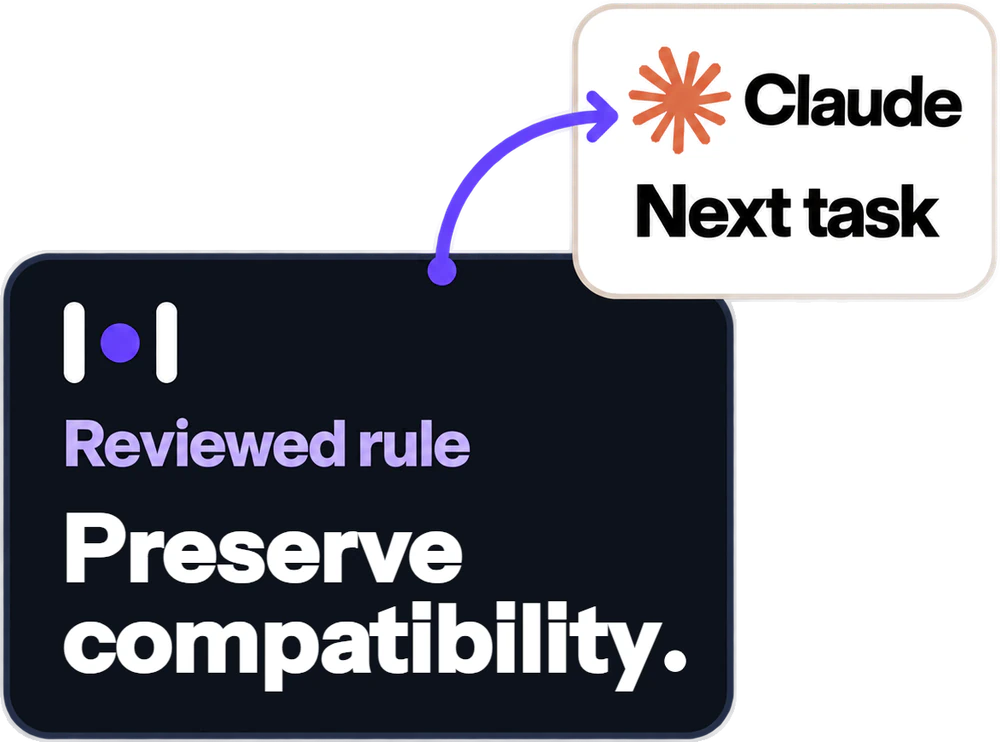
A dark Kadmo card, Reviewed rule, Preserve compatibility, leads by a violet arrow to a Claude tile, Next task.

Should we extend this service or replace it?

Imagine your team needs to add a new reporting workload. Extending the existing service looks quicker, but an earlier migration exposed a compatibility problem. The implementation ticket describes the new behavior; the architecture notes explain the constraints; a previous run records what failed. A useful recommendation has to connect those pieces and explain the tradeoff. This is the kind of question to bring to Kadmo: a decision about your software, grounded in the work your team has already done.

Choose the sources that matter to this question.

Begin with the relevant project material. Select the repository and ticket in Kadmo’s context picker. Name the earlier run you want Kadmo to inspect, ask it to read the applicable skill-pack knowledge and attach the architecture notes that describe the service and its consumers. A focused brief makes it easier to spot an omission: the missing consumer constraint matters more than another page of general advice about service design.

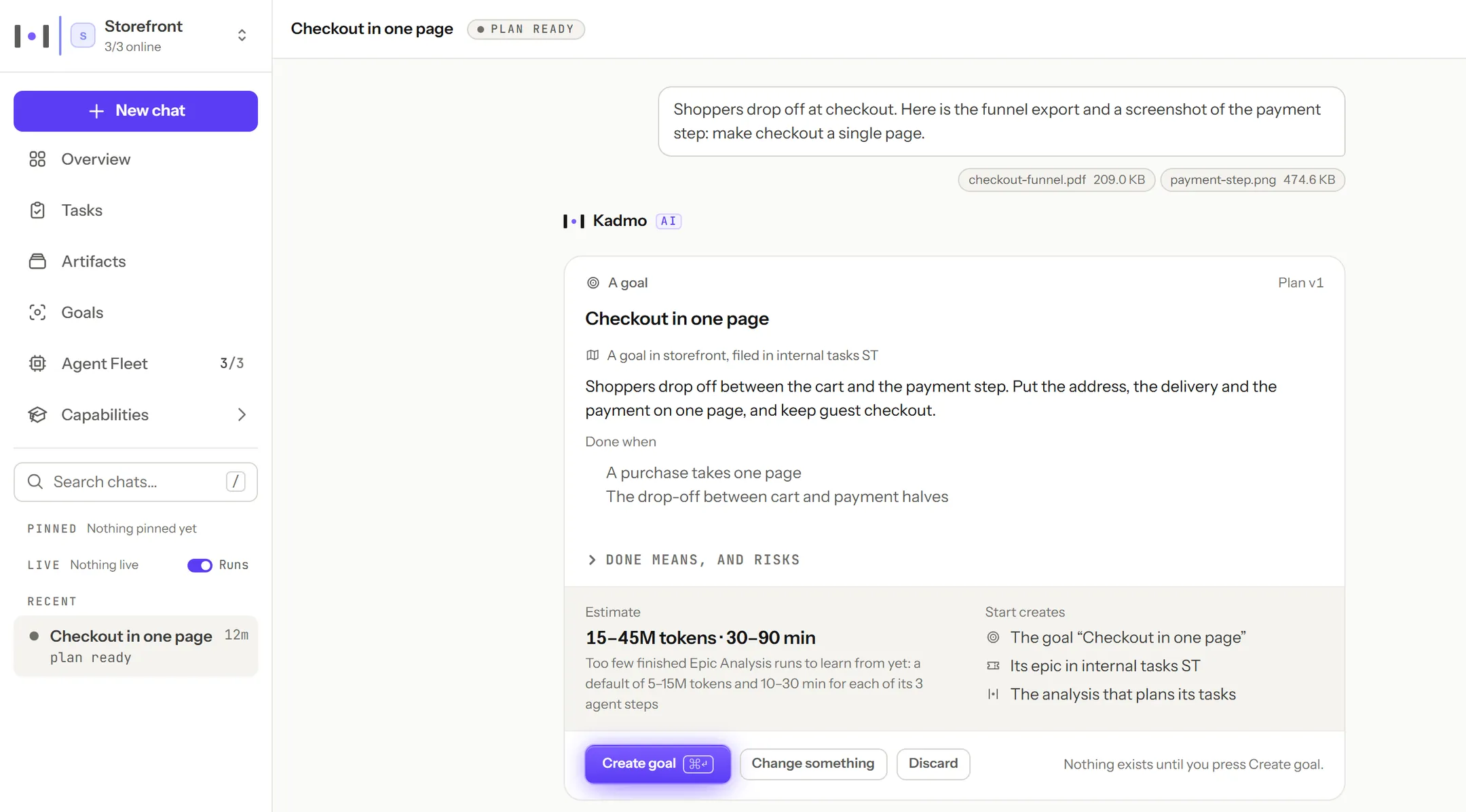
An Ask thread in the Kadmo app: a question about checkout with a funnel export and a screenshot attached to it, and the goal Kadmo proposes in answer, with its brief, what counts as done, the estimate and Create goal.

See what the recommendation rests on.

An answer in Kadmo carries source references you can open. Follow them to the underlying ticket, run or knowledge page before accepting the proposed direction. In the reporting example, ask which compatibility requirement supports extending the service and which evidence would favor replacement. A reference makes the reasoning inspectable; the team still judges whether it supports the conclusion. That gives an engineer a specific assumption to challenge and a product lead a clear tradeoff to discuss.

Apply the way your team makes decisions.

Your team may require a migration path, an account of affected consumers and a rollback plan before accepting an architectural change. Keep those expectations in role instructions and skill-pack material so they can guide the work. A reviewer then assesses the proposal against the project’s standards. The recommendation should explain what can change, what must remain compatible and what still needs investigation. The model contributes analysis within a working method your team maintains.

Keep the decision in the team’s working knowledge.

Once the team agrees, turn the useful conclusion into an explicit rule or constraint. For example, record that reporting consumers must keep the existing contract during the migration, together with the reason and the condition for removing it. Review that update before it becomes guidance for later work. Reusable skills can also reach colleagues’ local Claude Code sessions and managed Claude Code agents through the account marketplace; the Claude Code alternative page explains their distribution.

Use another model with the same project foundation.

Provider independence becomes practical when you can keep the decision brief, selected sources and maintained instructions while evaluating another supported model. Compare the recommendations against the same requirements: did each identify the consumer constraint, explain the migration risk and distinguish evidence from assumptions? Keep Claude where its results suit the task. Choose another available model where that serves the work better, adjusting instructions when needed. The team’s judgment and project knowledge remain the basis for accepting the result.

Take the knowledge into your next task.

Kadmo in your preferred client

Built-in MCP server · Claude, Claude Code and compatible clients

Connect Claude, Claude Code or another compatible client to Kadmo’s built-in MCP server. Read the account’s knowledge, inspect an earlier run or dispatch work using the decision you just agreed. Each tool acts as the signed-in member, within that member’s account and permissions; changing account content requires Admin access. Your preferred client becomes another way to work with the team’s Kadmo knowledge and operation.

When Claude already covers the task.

Claude’s projects and connectors may already give an individual or a small team what they need for a self-contained investigation. Keep that setup when it fits. Kadmo becomes relevant when the decision draws on account tasks, runs and maintained engineering knowledge, or when that knowledge needs to guide subsequent agent work. For organization-wide access and participation, see the ChatGPT alternative page.

Questions about project knowledge.

Does a source reference make a recommendation correct?

It gives you a way to inspect the evidence. Check that the source is relevant, current and strong enough to support the conclusion, especially when the decision affects compatibility or migration work.

What if our project instructions disagree?

Resolve the conflict and update the maintained guidance. Keeping contradictory requirements in the brief passes the ambiguity to the model and to the next colleague who uses it.

Who decides what becomes a team rule?

Your team does. An answer can propose a change; an authorized person reviews and records the guidance that future work should follow.

Bring one decision your team has not settled.

Choose a real question and the material needed to assess it. Agree what the recommendation must explain, then review its sources and reasoning with a colleague who knows the project.