Codex
OpenAI models · Supported agent CLI
Run Codex as a coding agent in Kadmo, with OpenAI models. Combine that execution choice with the task dependencies, playbooks and review decisions your delivery goal requires.
Run the work
Goals Playbooks AI coding agents Ask KadmoEquip the agents
Claude Code skills Skill packs MCP servers IntegrationsKeep control
Self-hosted agents Guardrails Models and keys ReportingA coding agent can help with a change. Delivering a goal across a service, its client and regression tests also needs a plan for dependencies, handoffs and review.
Kadmo coordinates that work through tasks and playbooks. Give it a defined engineering goal, see which tasks can run together and review the evidence each step leaves behind. Your developers retain the decisions that need their judgment.
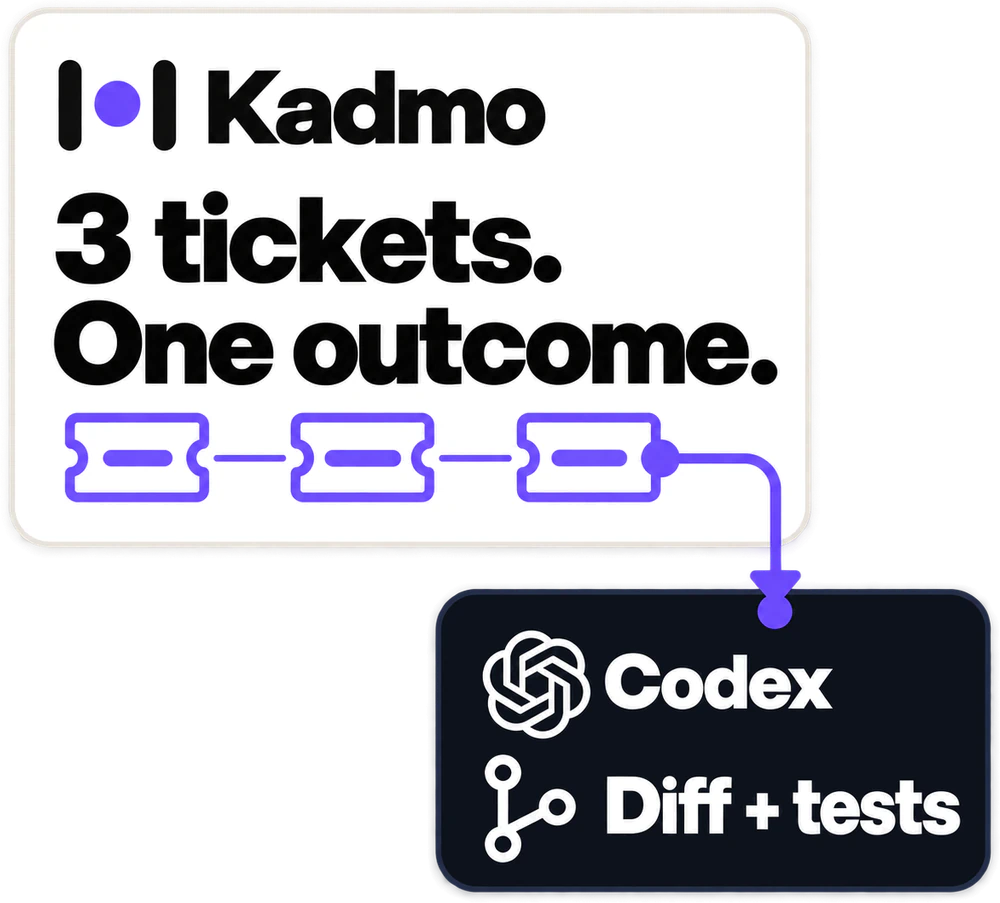
Take an example goal: change how a service returns checkout errors, update the API client and cover the behavior with regression tests. Those changes belong to one outcome, but they have different prerequisites.
Kadmo represents the goal as tasks, each with its assigned playbook and the work it depends on. The team can inspect that breakdown before execution, including what must be true for the overall goal to count as complete.
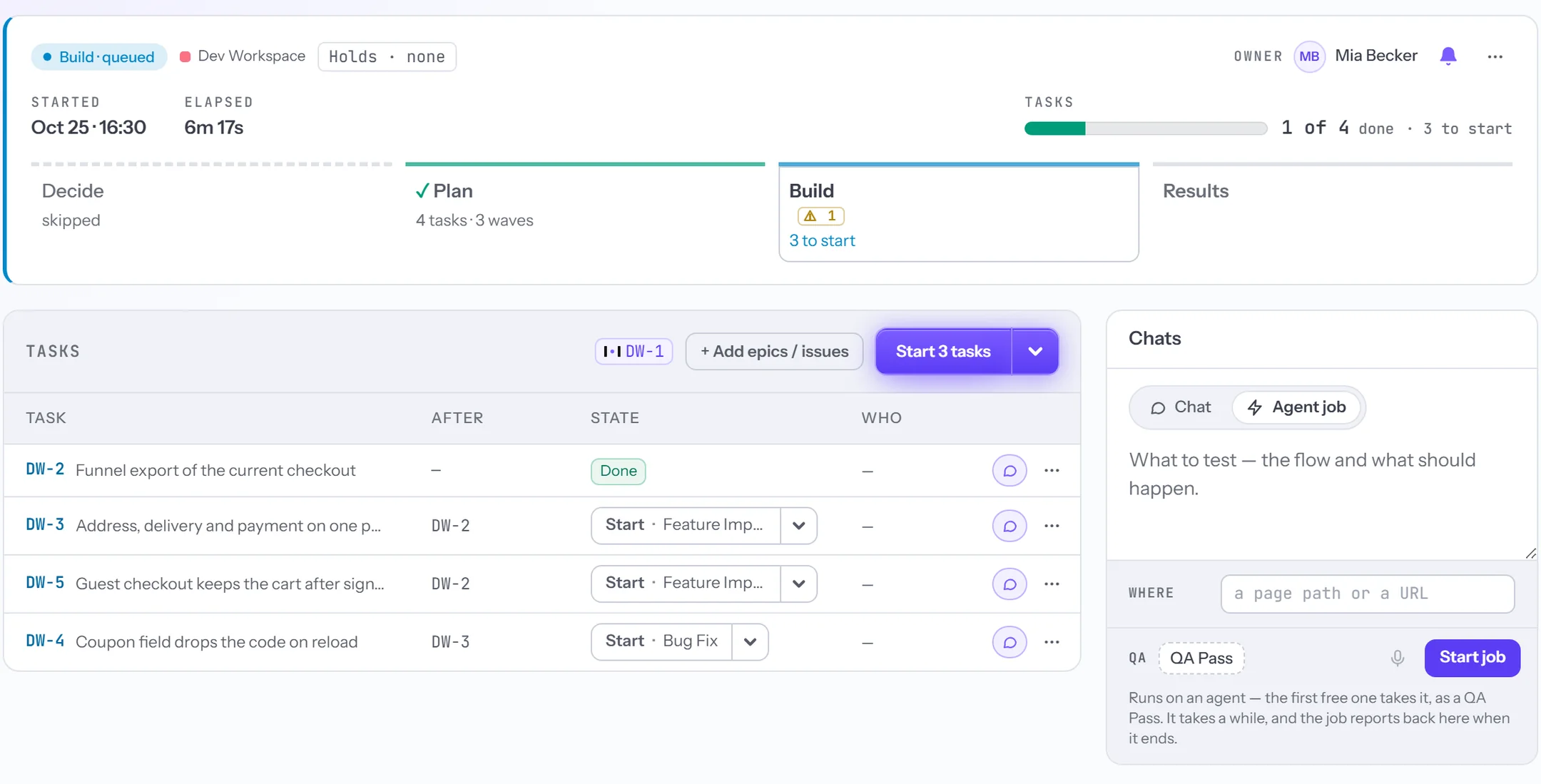
With an agreed API contract, service implementation and client preparation may be able to begin together. Integration checks must wait for the changes they exercise. The dependency plan determines which tasks are ready and which remain blocked.
Kadmo starts ready work in waves. This gives parallel agents a useful place in the delivery plan while preserving the order required by the actual change.
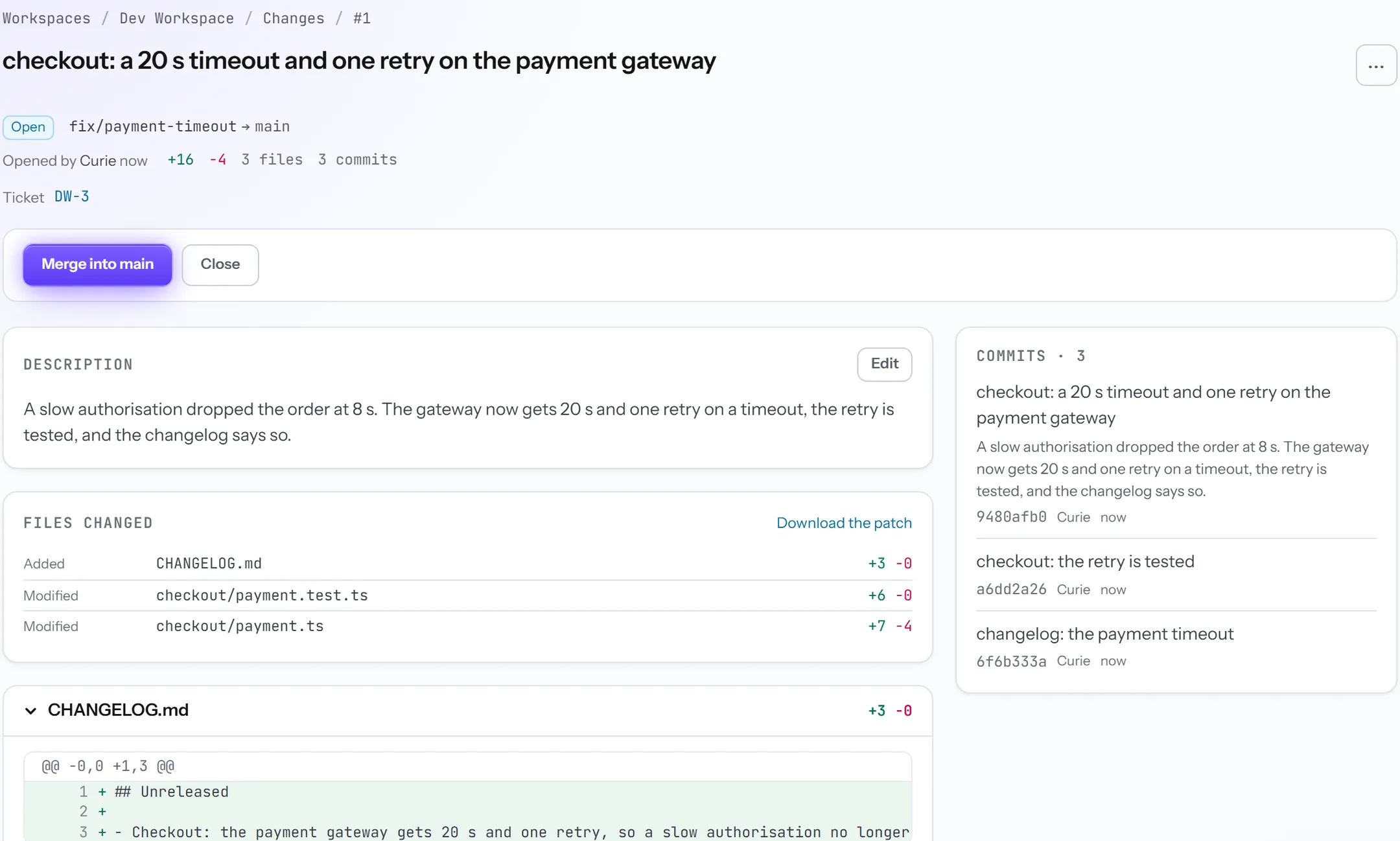
An implementation step reports what changed, what was checked and which questions remain open. A gate determines whether the work can proceed. The next agent receives the result it needs, and a developer can inspect the record when reviewing the change.
For the checkout change, the reviewer can follow the implementation report into the resulting diff and test evidence. They can assess the change without reconstructing the whole job from its conversation history.
Suppose the regression check finds that the client still handles an old error incorrectly. The playbook can send that work back to the affected step while retaining the record of completed work.
Some failures call for another attempt within the playbook’s limits. Others need a revised requirement or a person to intervene. The stopped step leaves its findings available so the team can choose whether to revise, resume or escalate the work.
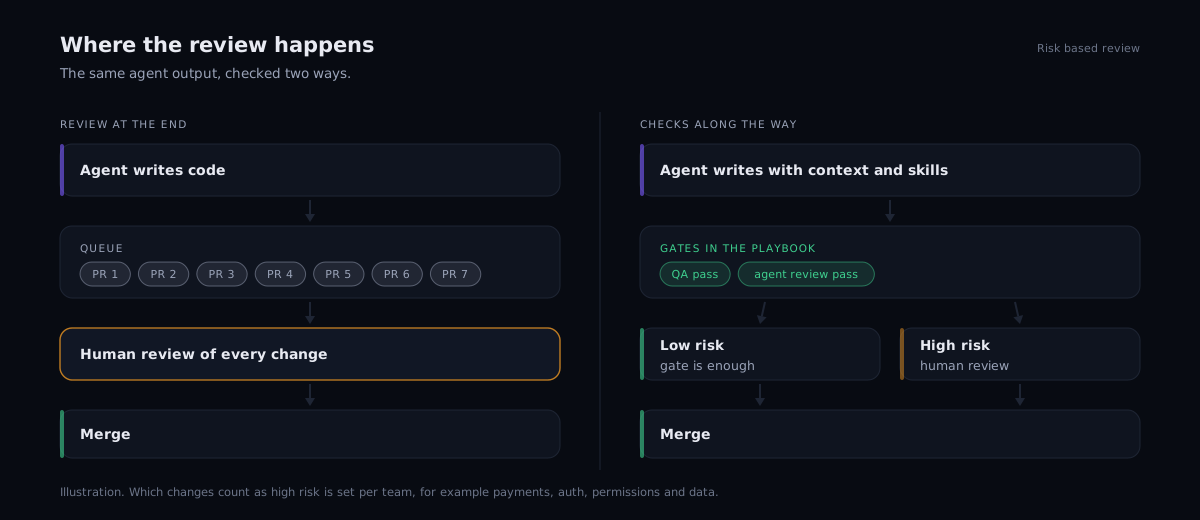
Changing an error message and changing a payment rule deserve different scrutiny. A playbook sets where a person must decide whether work is acceptable and where an agent’s check can advance the process.
Agree those boundaries before delegating the queue. The human reviewer should know what they are approving, which evidence is available and how their verdict releases, returns or pauses the work.
During a pilot, record completed changes, time waiting for review and the rework required. These measures help you judge whether the arrangement improves delivery for your team. Code volume alone cannot answer that question.
Our post on the coding-agent review bottleneck explores why faster code production can leave review waiting behind. Use your pilot to find where your own team spends time waiting, checking and revising work.
Developers can continue using Codex interactively for investigations, experiments and changes they want to steer themselves. Delegating a queue does not mean giving up that way of working.
Kadmo supplies the coordination when several tasks must reach one reviewed outcome. For the environment and maintained playbooks around an individual coding agent, explore the Claude Code alternative.
OpenAI models · Supported agent CLI
Run Codex as a coding agent in Kadmo, with OpenAI models. Combine that execution choice with the task dependencies, playbooks and review decisions your delivery goal requires.
Choose a few related tickets with clear dependencies and an outcome your team can verify. Decide which work may proceed independently, where a reviewer is needed and what will count as completion.
Then evaluate the whole path: preparation, execution, failed checks, review and the final result. Use the record to decide where delegated delivery helps and which responsibilities your team should retain.
No. Select a bounded set of suitable tickets. Your team can evaluate delegated delivery while continuing to handle other work through its existing process.
Resolve the important uncertainty before expecting a completed change. Agents still need a usable definition of success. A missing product decision should become a question for the responsible person.
No. Supported model assignments can differ between steps. The OpenAI alternative page shows how to assess those choices against quality requirements and model spending.
Bring a small engineering goal and see how Kadmo coordinates the work needed to complete it.